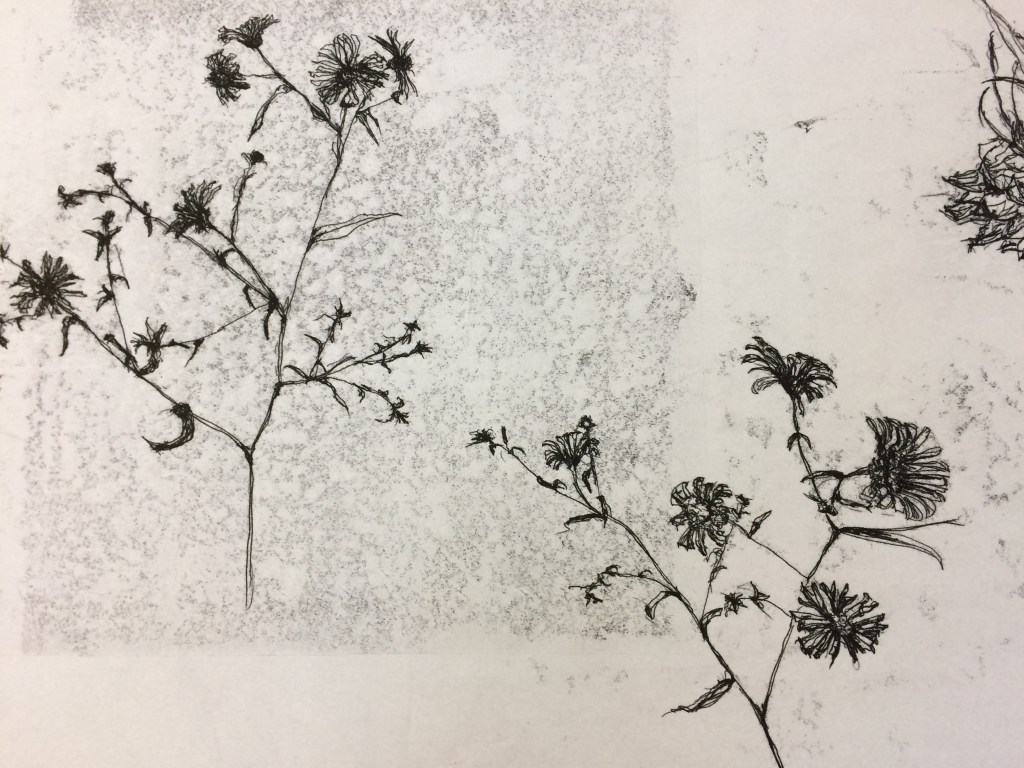
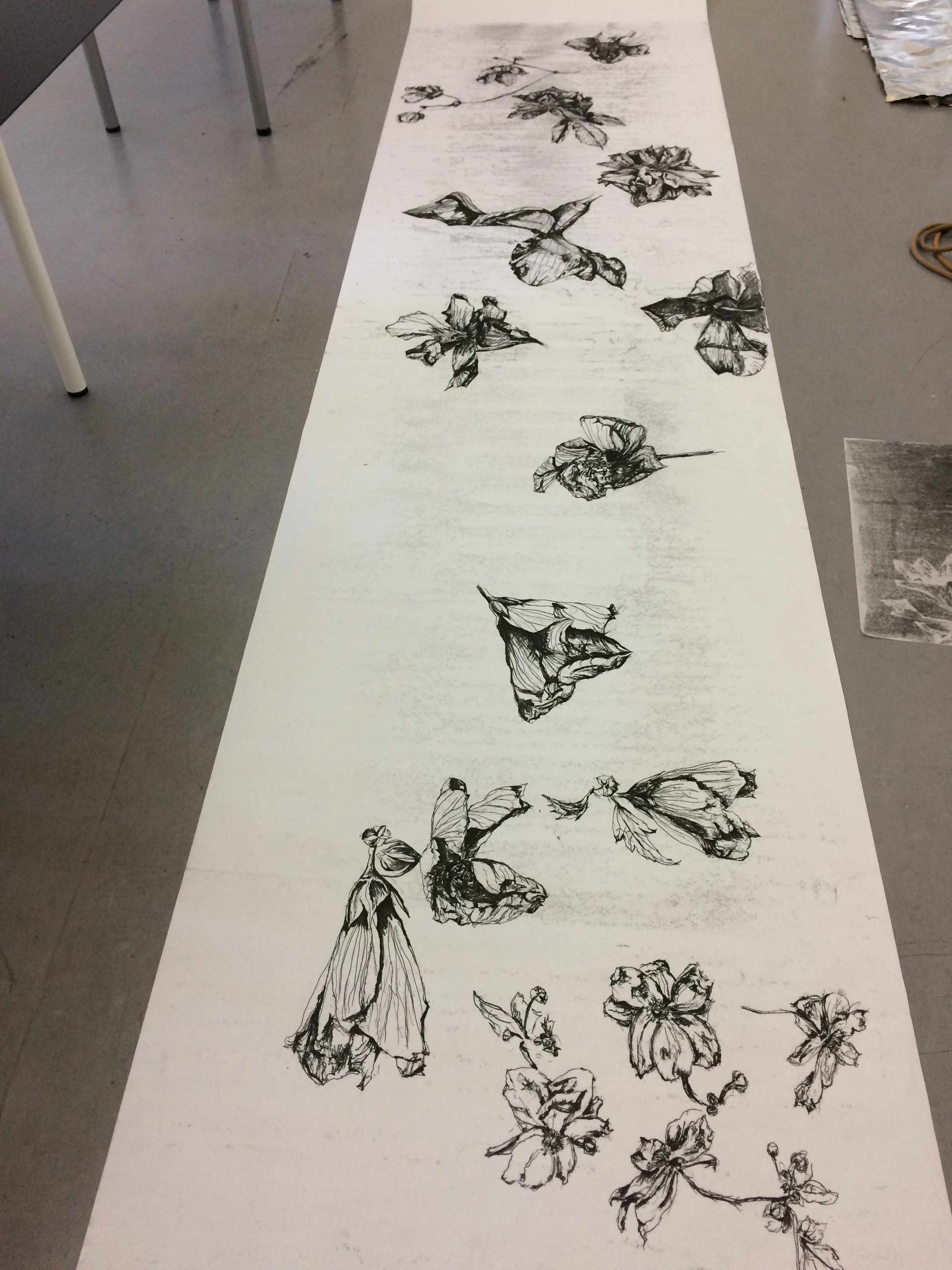
Creating the Growing Installation – mono printing. I decided to start with figurative drawings of flowers that I have seen bees pollinating. I drew the flowers from life onto the hosho roll of paper. I want to draw the audience into my installation using symbols that they recognise.
Mono printing in the gallery space. This is the first time I’ve attempted to print on such a large scale. The paper is the aprox width of the gallery-7m. I thought about buying a glass table top as a smooth surface to print from, which is traditionally what is used, but I found that spreading the etching ink onto an ikea table gave a good smooth surface print. The problem with using the table was that it was not wide enough and so the edges of the table easily left print marks on the paper. To resolve this I sourced a piece of used acrylic plastic from the wood workshop that was a metre wide. Thankfully one side was scratch free. The printing worked well. Different value pencils were used to give different thicknesses of line. The Strong Black etching ink gave a deep black line as the ink held to the fibres of the Hosho paper roll.
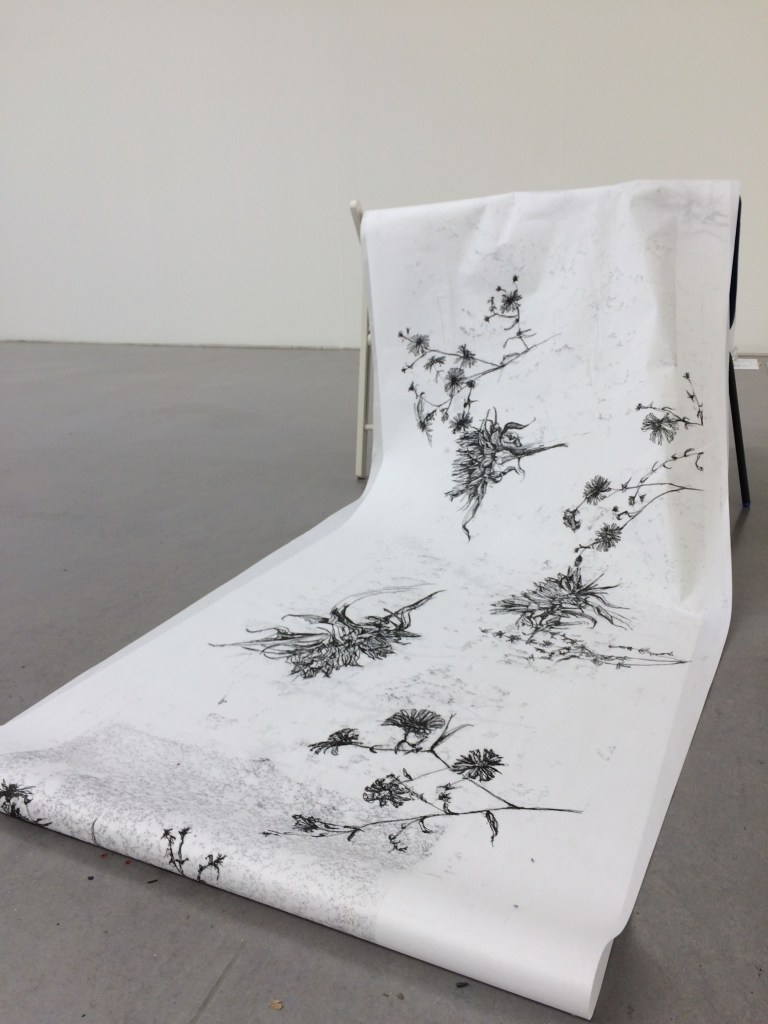
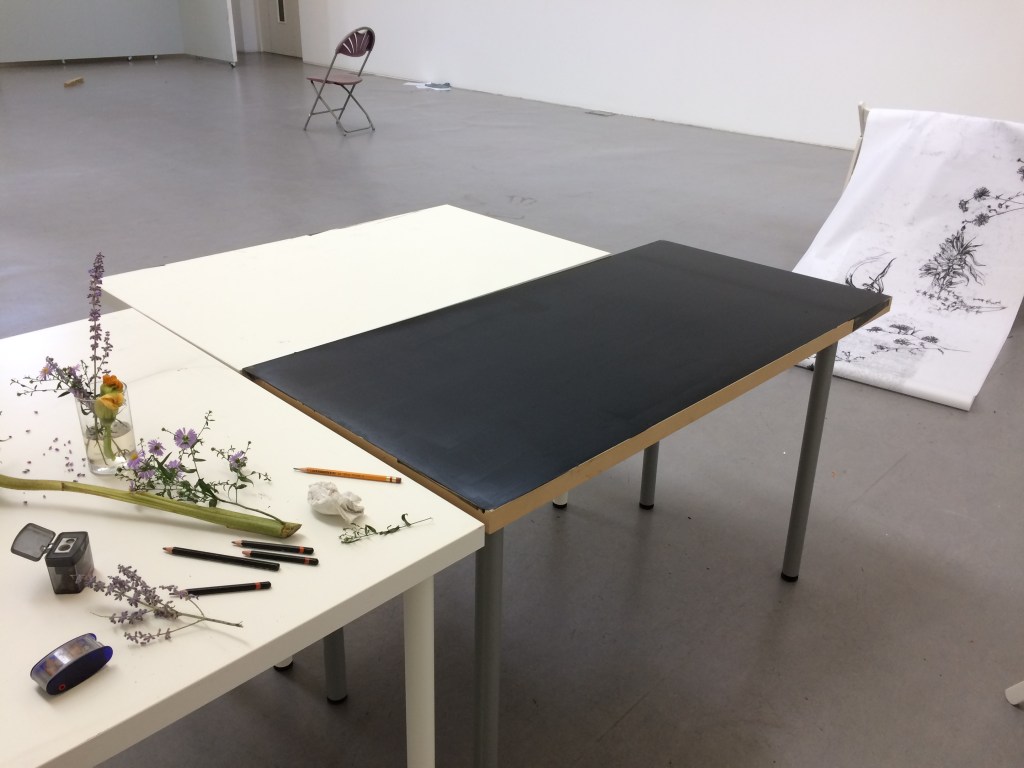
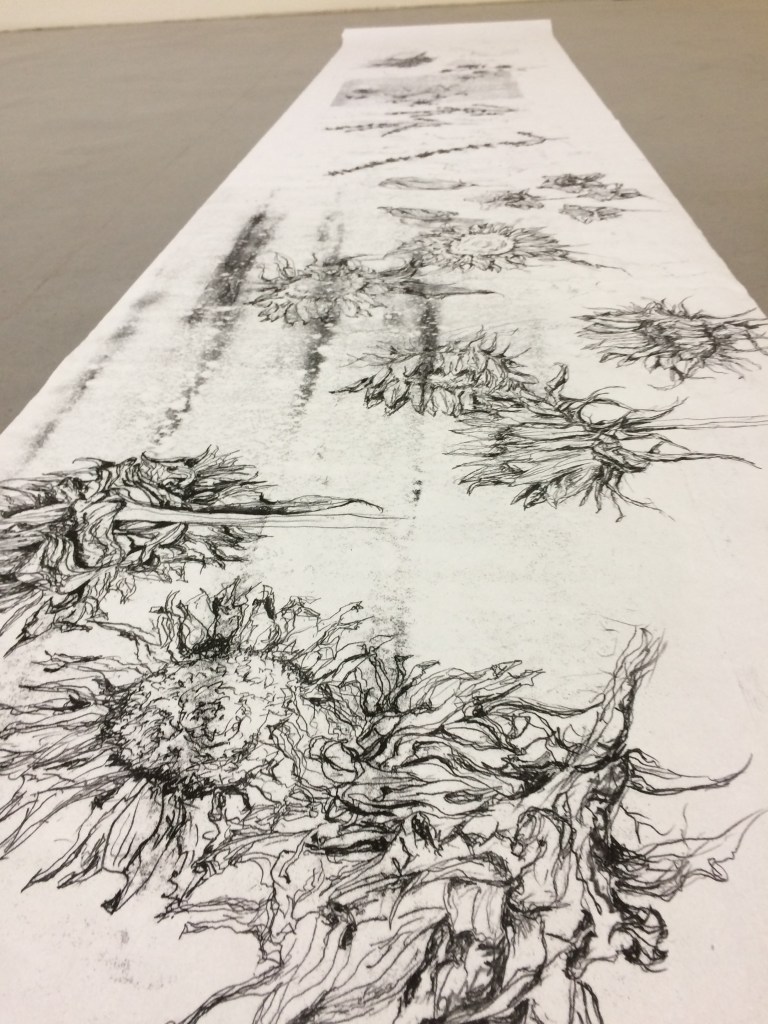
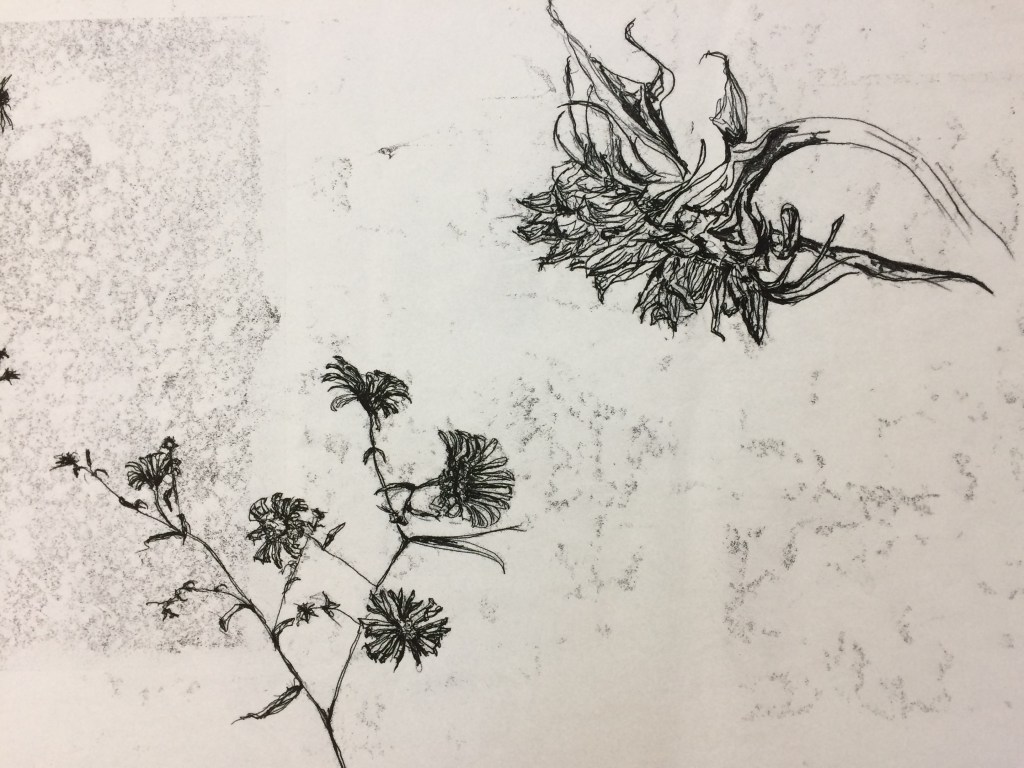
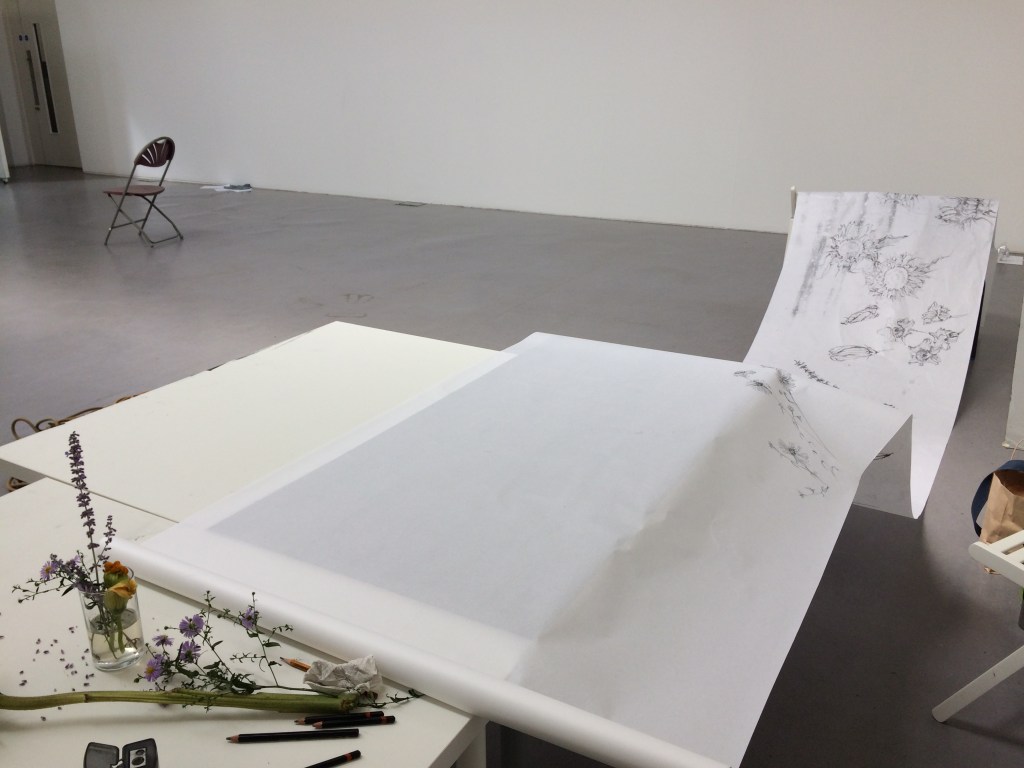
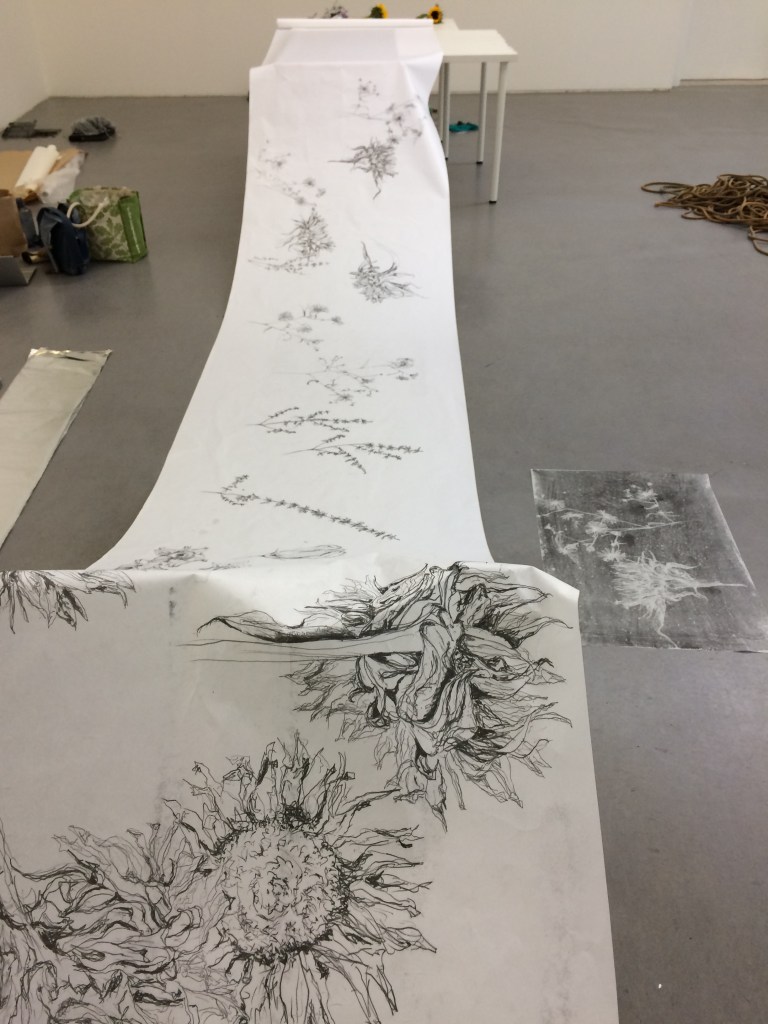
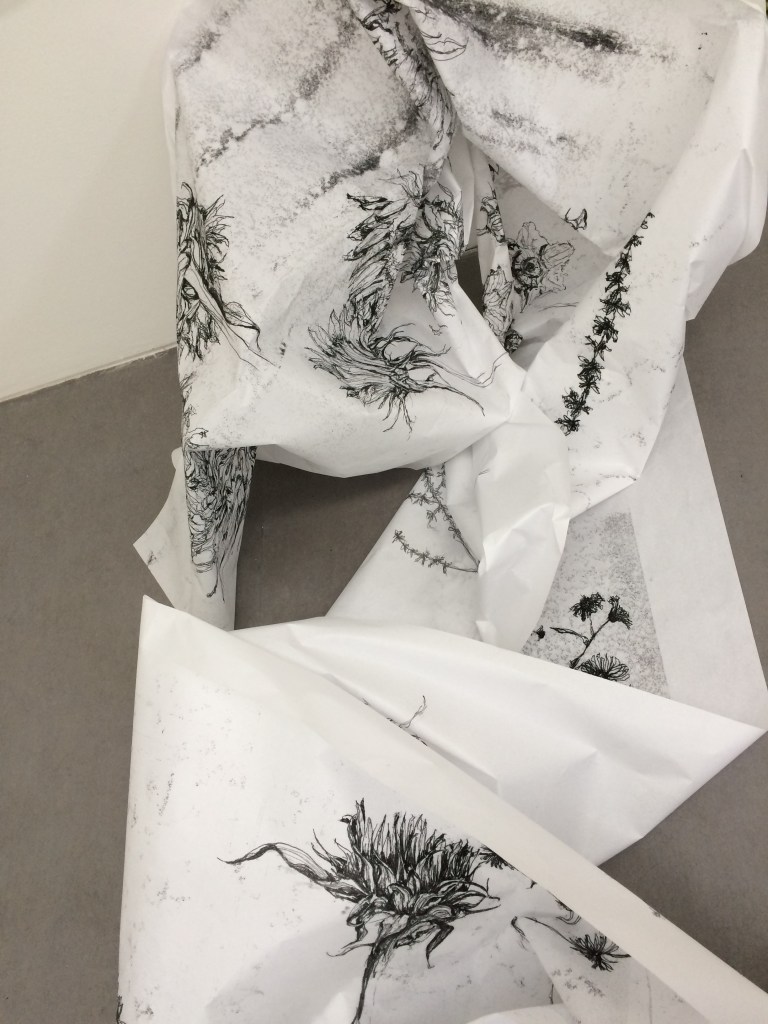
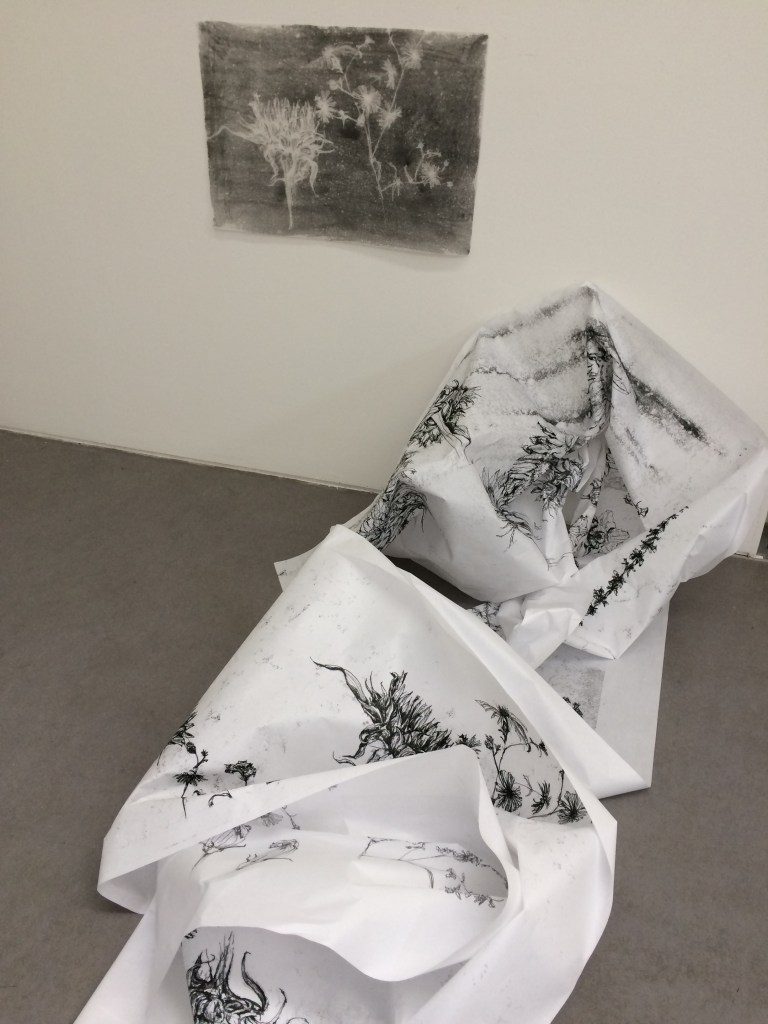
Testing how the monoprints would look as 3 Dimensional sculptural drawings? Could they be placed on the floor or dapping from the wall to the floor? How do they look with the ghost print on the wall? I think it’s great to see both sides of the paper, the drawing and the print from different angles while the paper is on the floor. Peering through the gaps. The structure of the paper is not strong enough to stop it from sagging over time though so it looses its shape over a couple of day so would not be appropriate for the exhibition. Also there is the western philosophical view of the lack of value given to an object placed on the floor to contend with while placing a print on the floor.
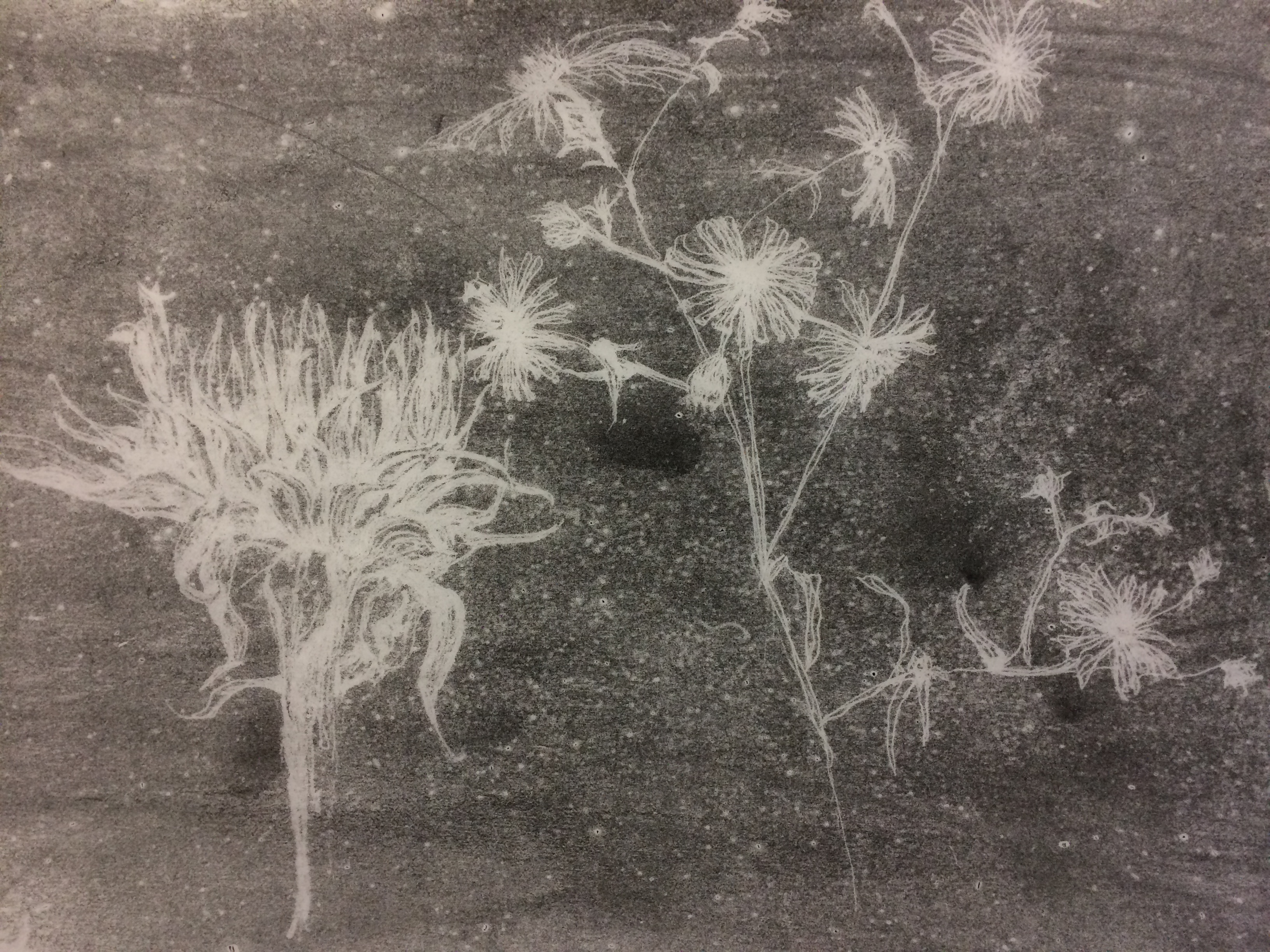
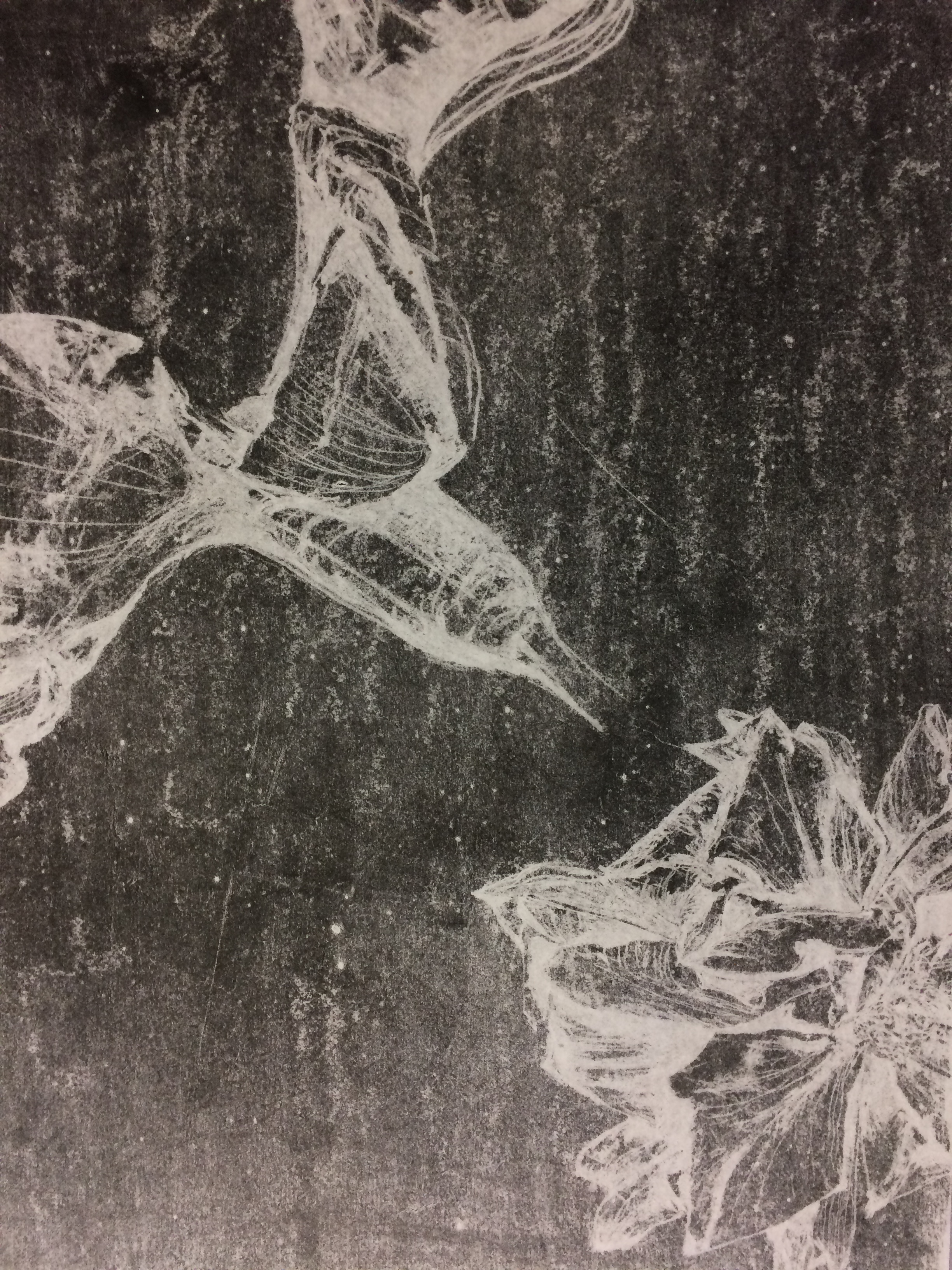
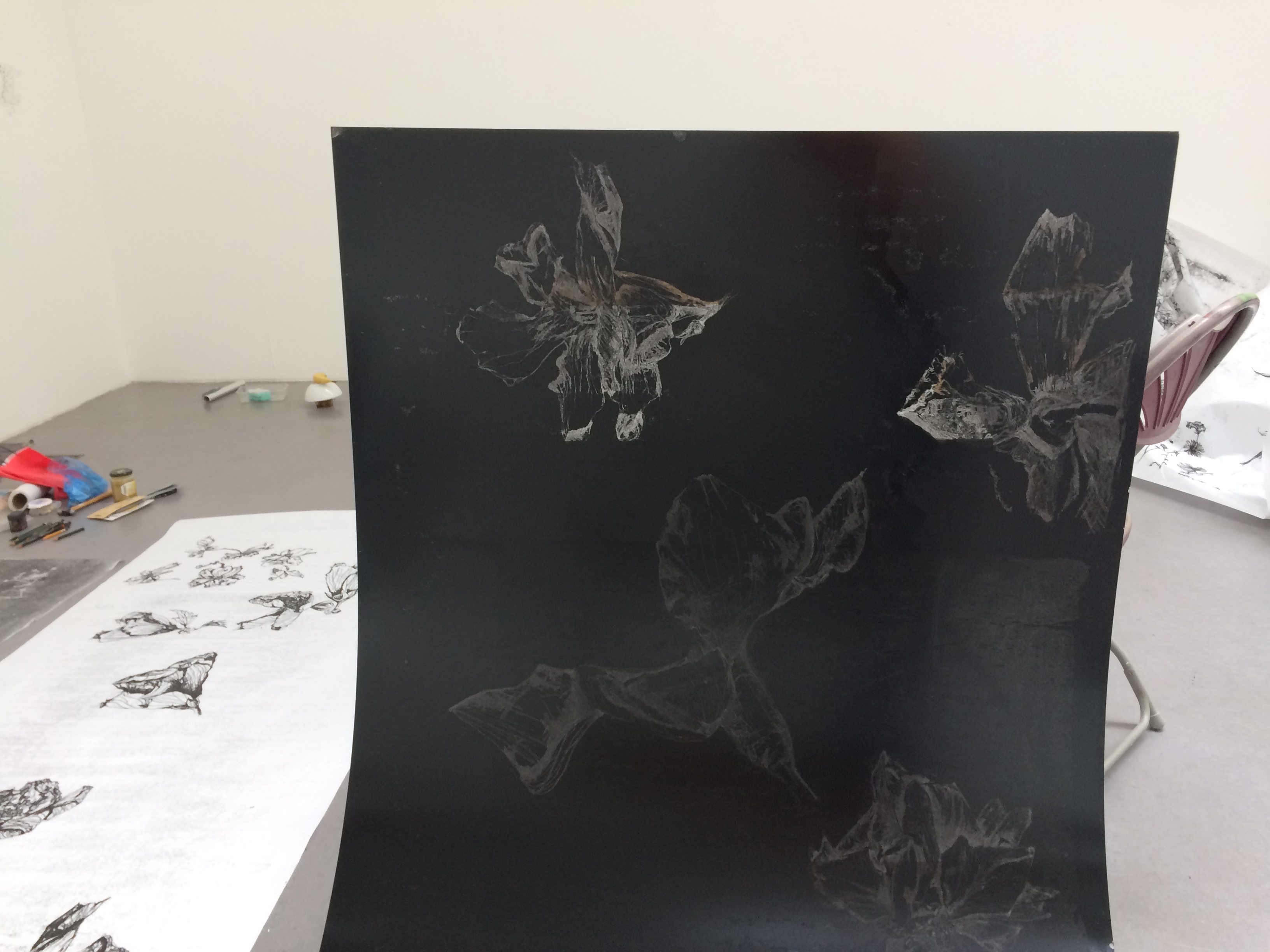
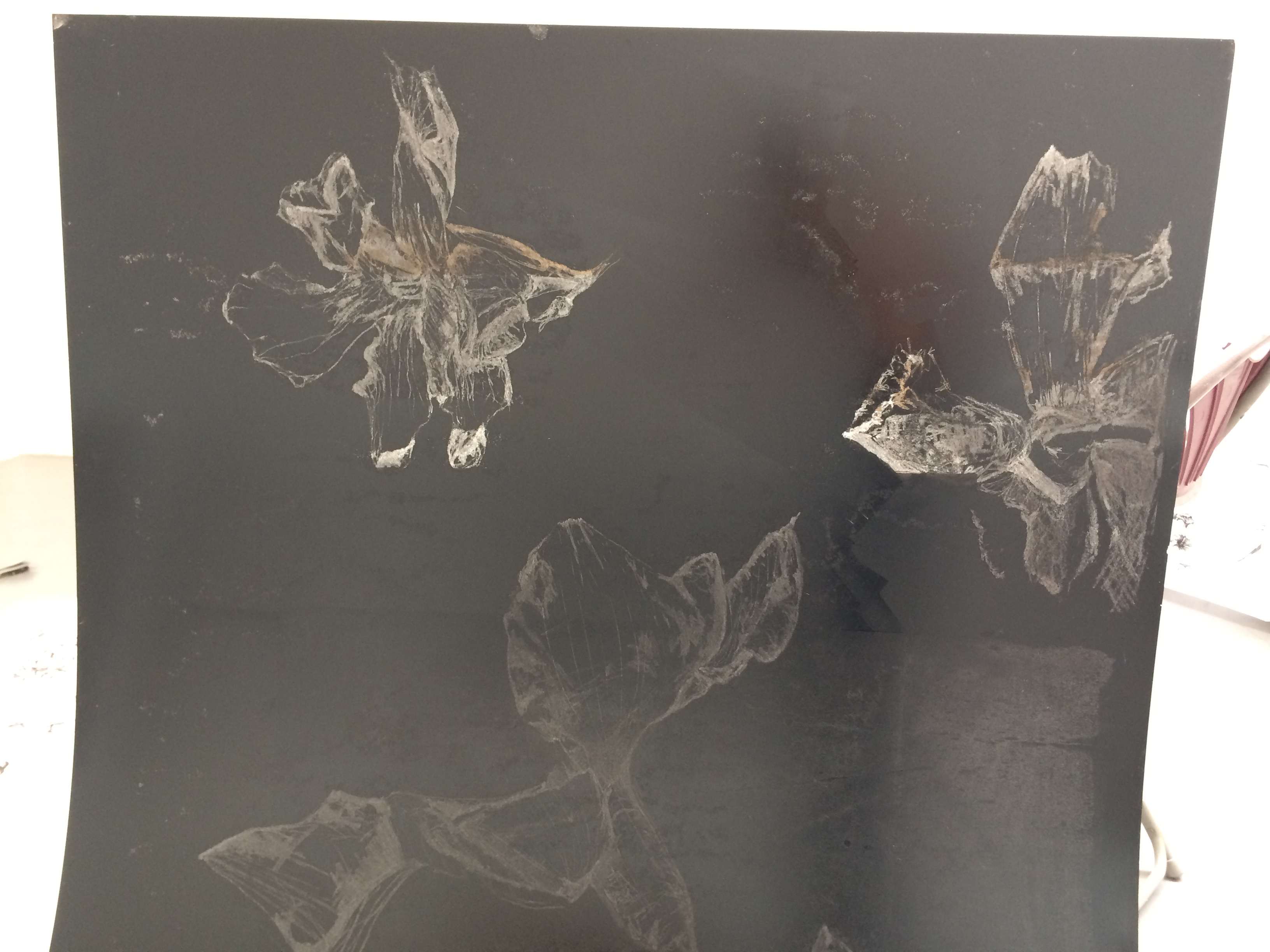
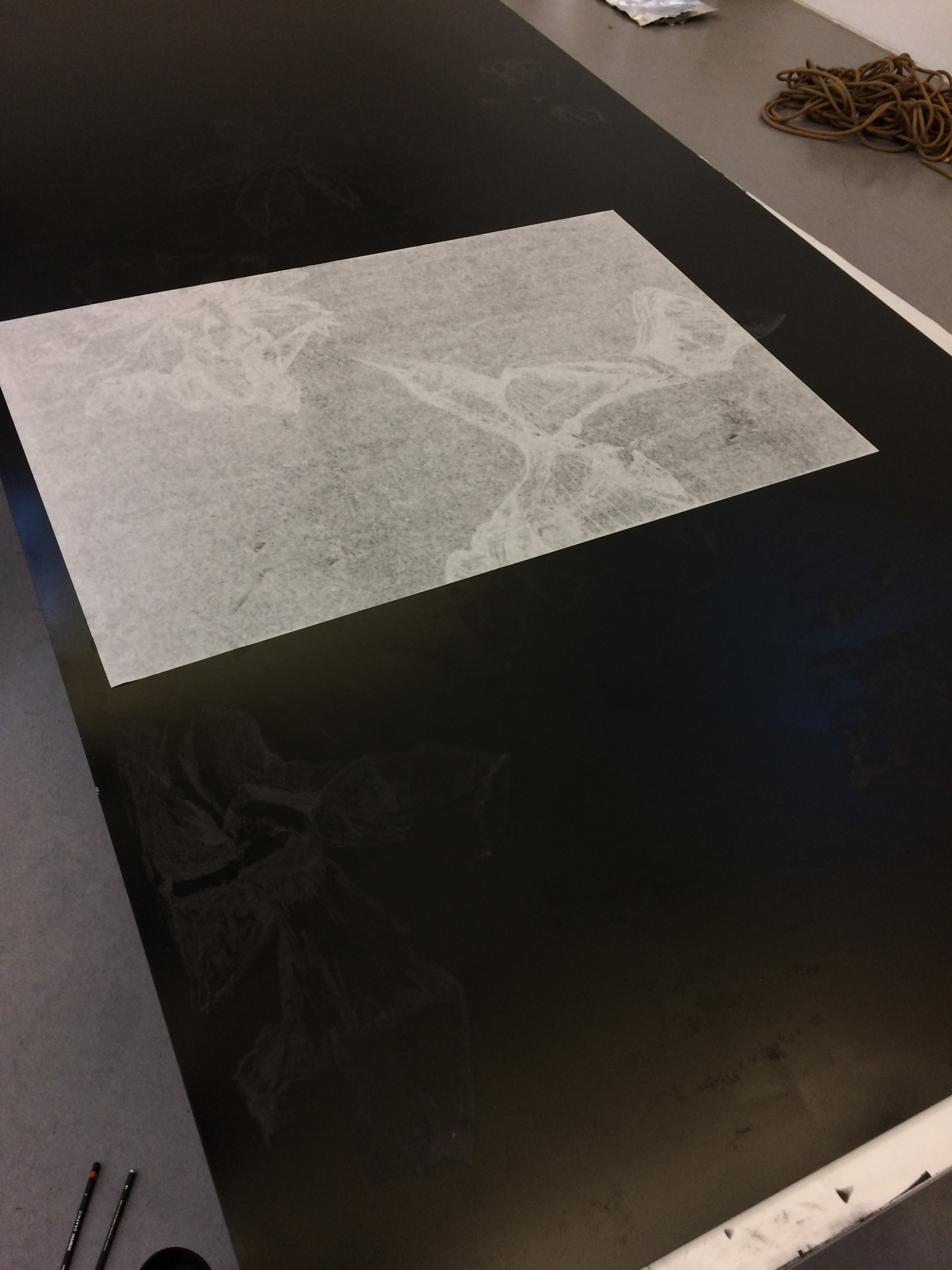
These two ghost prints were made as a record of the negative imprint of the printing process. The idea of what is left behind. A record of marks and movement. Something for the archive when the main print no longer exists after it has been saturated with honey. I think it will be impossible to conserve the finished print in a good state after the show. The honey attracts copious amounts of dirt and sticks to itself.


Adding Colour with Honey
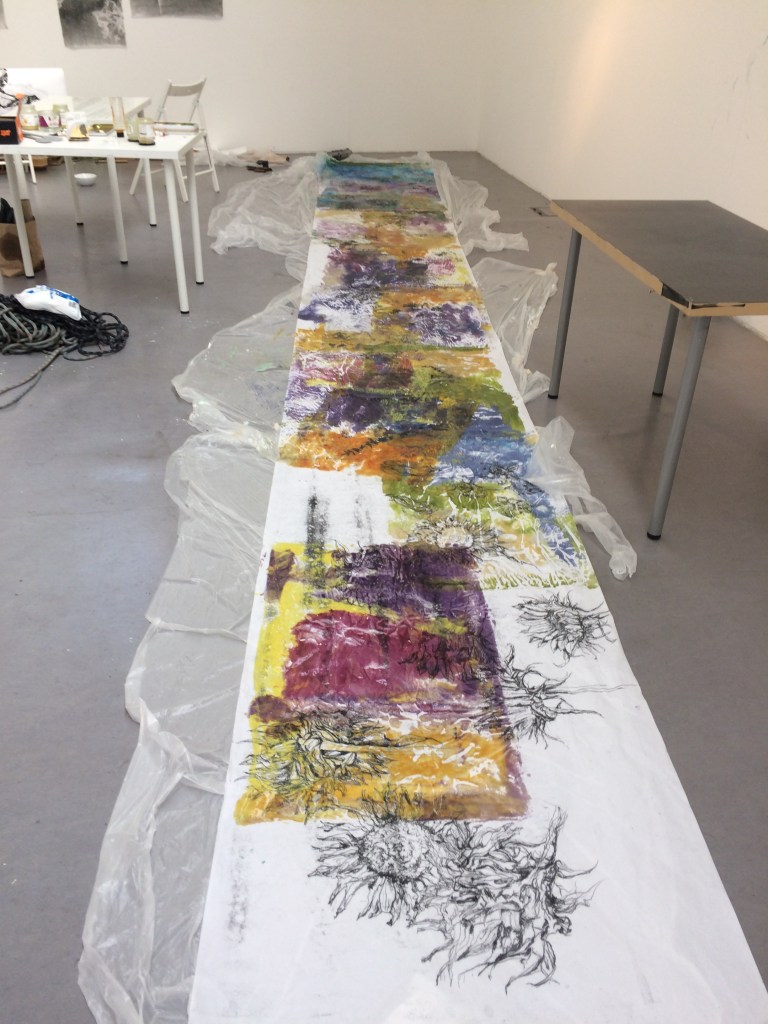
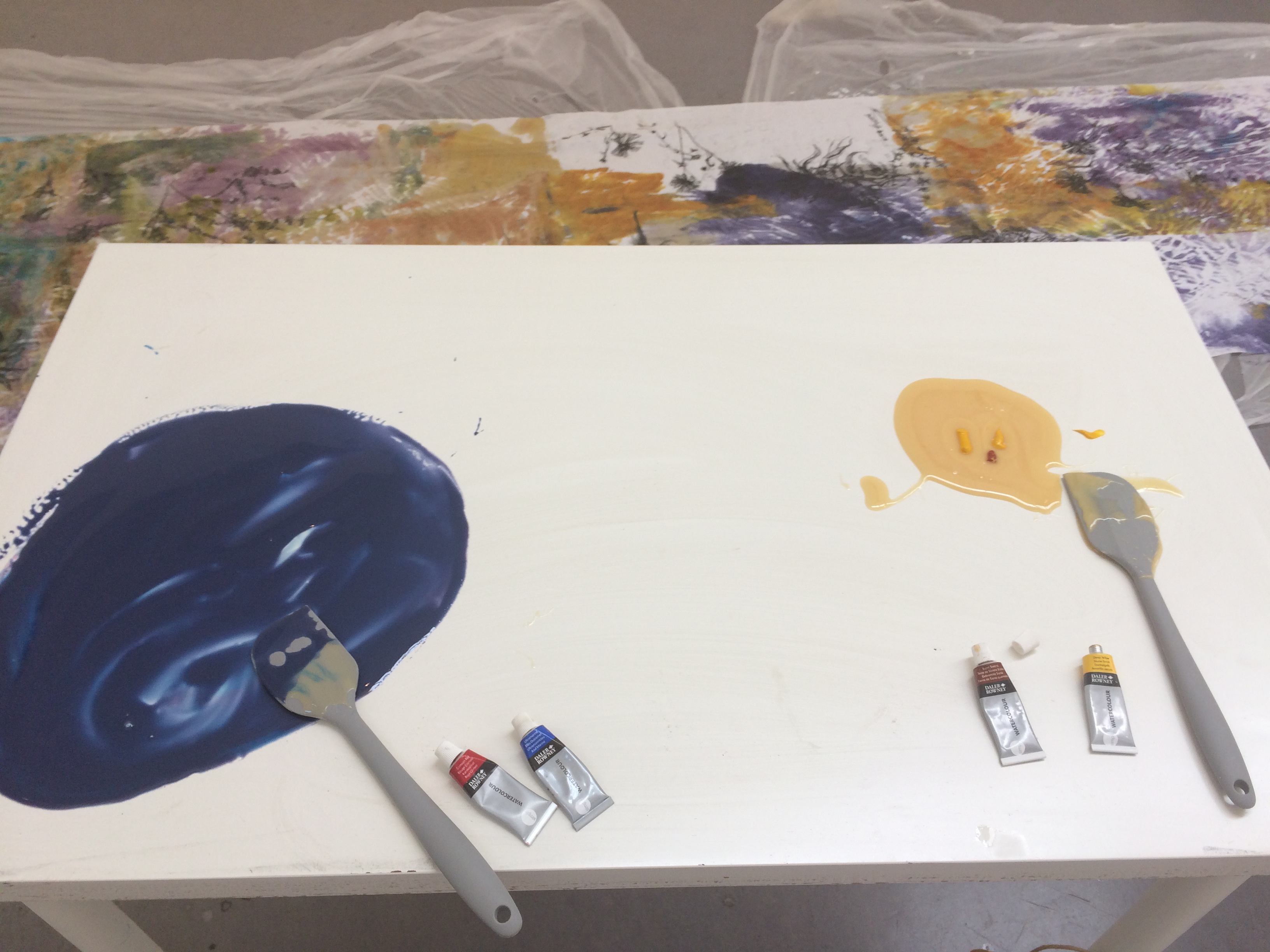

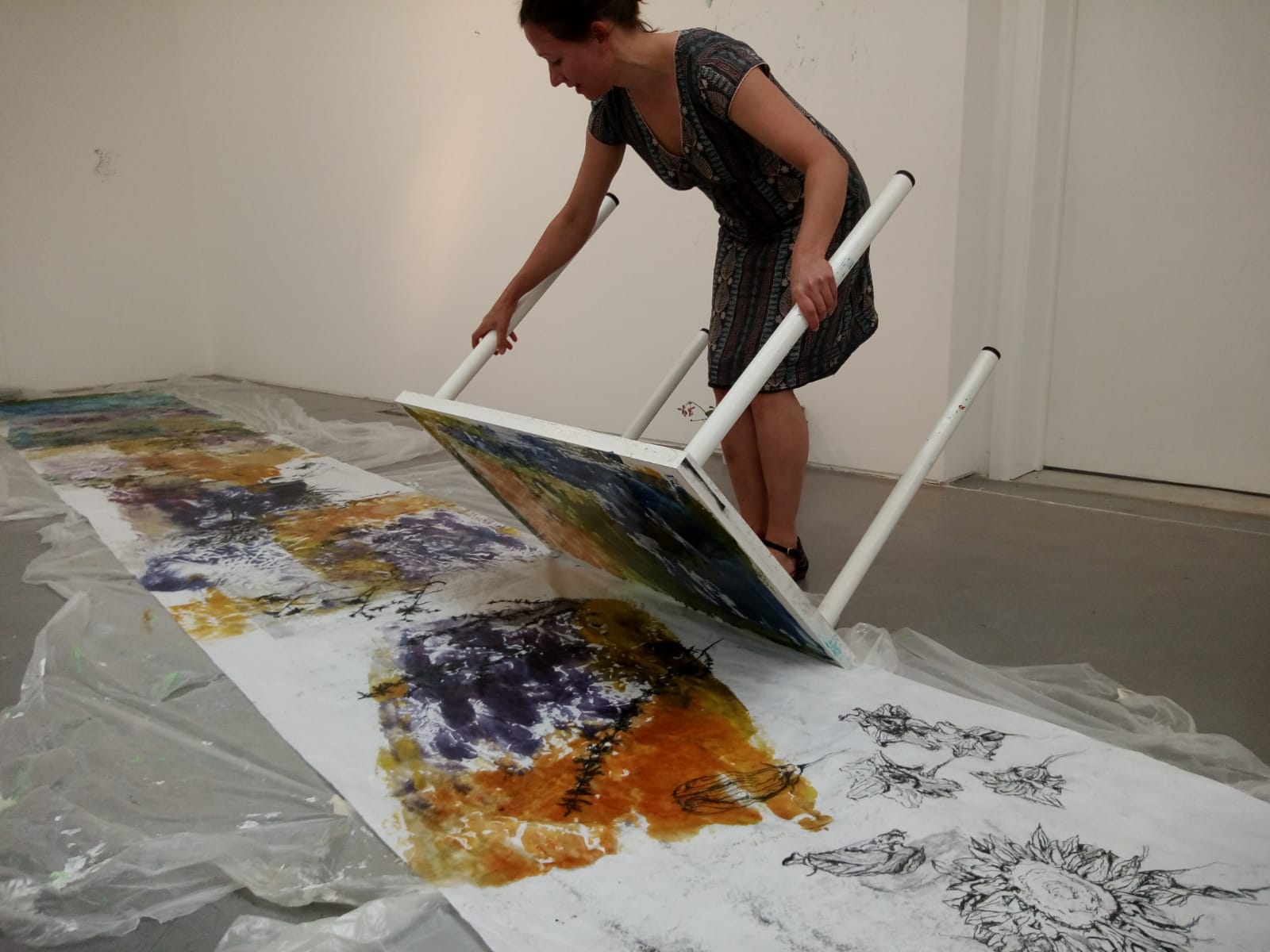
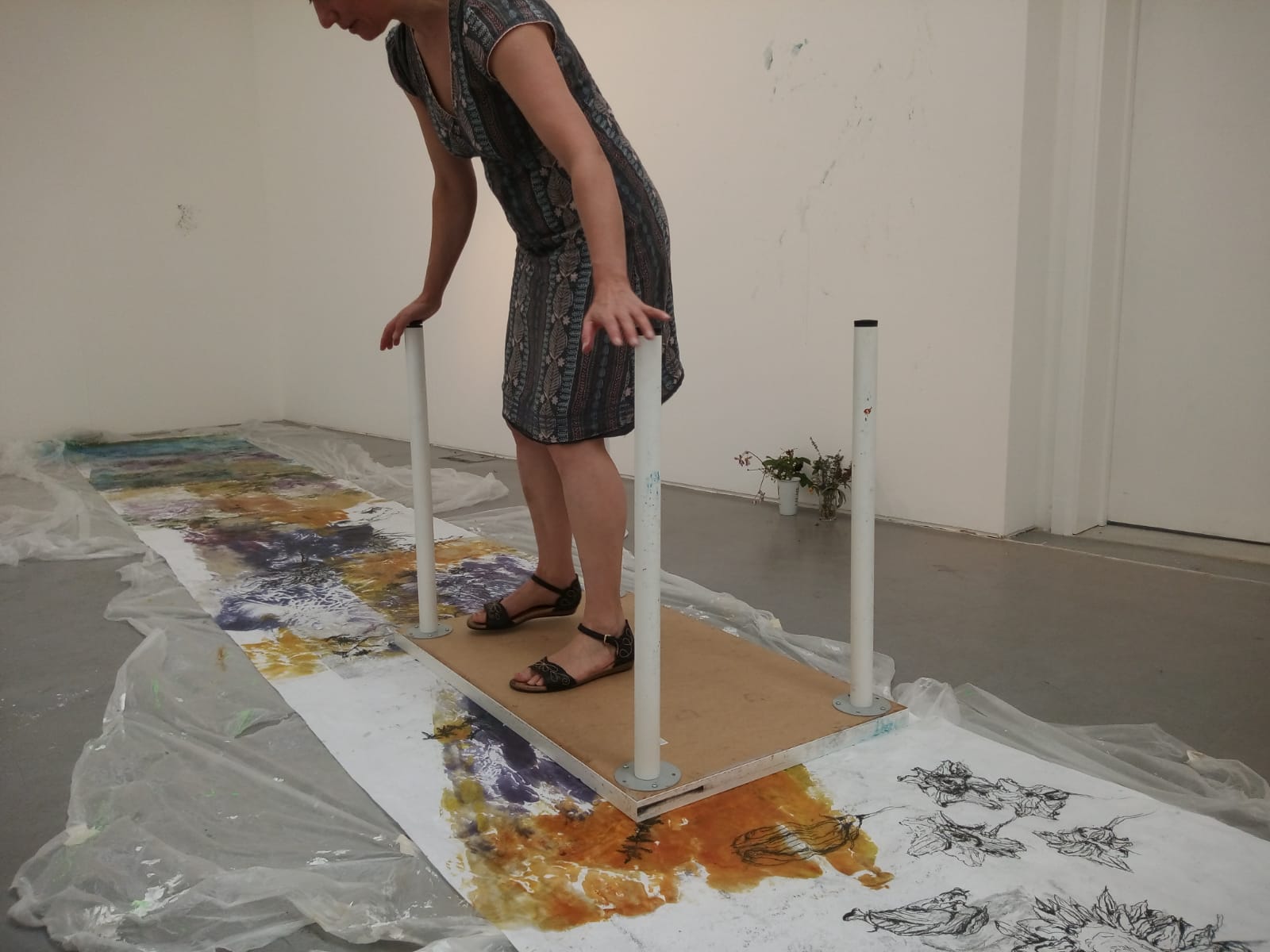

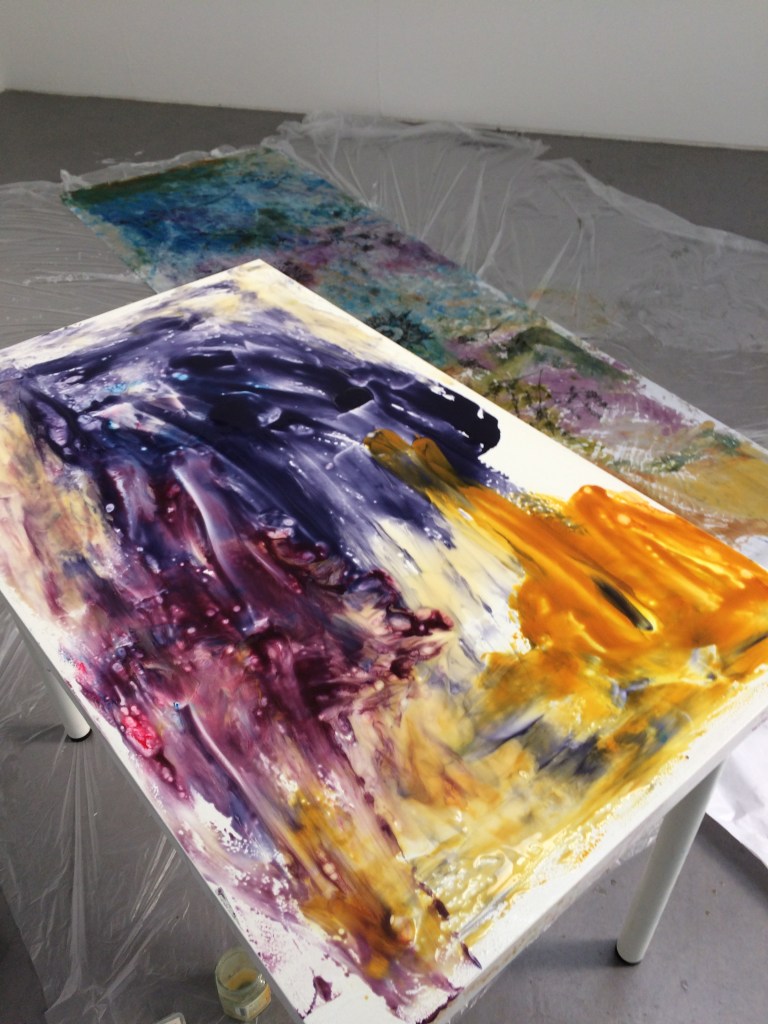
The honey was mixed with colours on top of the table top. Watercolour paints were used as they are water based paints and honey is water based so they mixed well together. It was difficult to get light tones of colour as the honey itself had a yellow colour. This made me decide to leave sections of the paper uncoloured so that the whiteness of the paper gave the highlight. I chose to mix colours to give colours in the range that Bees can see from yellow to ultra violet in the electromagnetic spectrum. Bees can not see reds. I chose to use vibrant colours because when a flower is ready to be pollinated it glows to signal and direct the bee to the correct flower. I decided to print using a table top so that I printed in a scale that matched the size of the paper. This meant that there were horizontal and vertical lines in the printing. At one point I printed with the table on a diagonal but I did not do this again as the diagonal line became too pronounced in the overall print. If I decided a section needed less honey I printed from the same table top a second or third time. I also printed over sections multiple times to ensure that their was a consistency of colour composition over the whole 7m of paper. After the first printing had dried I also printed using smaller surfaces from plastic trays and honey empty honey pots. I also printed with my fingers to add colour highlights of bright blue. This bright blue colour mirrors the colour in the hanging pollen baskets.
I pasted the print to the wall using honey. I am also going to reapply honey to the print periodically so that the pollen will stick to the print when the audience pollinates the print with pollen. I chose to use the hosho roll of paper due to its strength and absorbency compared to other papers. The honey saturated through the paper due to capillary action of the honey moving through the gaps in the fibres. The hosho roll is machine made from Kozo pulp which is wood from the Mulberry tree. Kozo pulp behaves like cotton as this is why when the paper was saturated with honey it was flexible like cotton fabric or even looked a bit like silk when it was wet. The kozo pulp has long and strong fibres which means the paper can be moved repeatedly and peeled off the floor with out tearing. The repeated moving/ stretching of the paper did distort the dimensions of the print so that it would never lie completely flat on the wall when it was hung.

Bees collect pollen in pollen baskets by their legs. I hung the pollen baskets using climbing rope so they had some movement at different heights on a diagonal to draw the audience to the print. The baskets are made from paper and covered in a section of the honey monoprint so that they are relatable to the print on the wall and work together. The honey baskets contain coloured cornflower as pollen and paint brushes. The viewer is invited to paint pollen onto the print on the wall. Some pollen will be spilt on the floor as pollen is lost from flowers. The audience is being asked to be a pollinating insect.
 Lucy George